

TBM grus
TBM grus
TBM grus
TBM grus
TBM grus
TBM grus
TBM grus
TBM grus
TBM grus
TBM grus
TBM grus
TBM grus
TBM grus

Industria News
 Aug 17 , 2026
Hoist Chain Grades & Sizing: How to Choose, Inspect & Replace Load Chain
Aug 17 , 2026
Why the Hoist Chain Is the Most Critical Component
Walk through any workshop where an electric chain hoist has been in service for a few years, and the most worn component you will find is almost always the load chain. Motors can be rewound, brakes can be adjusted, and gearboxes can be rebuilt. A chain, once it has stretched, lost its surface hardness, or developed cracks, has only one destination: replacement. The difficult part is deciding exactly when that replacement is necessary.
Solum versus est the hoist chain sets the real safety limit of a chain hoist . Choose the wrong grade, let it wear past its tolerance, or mix chain types, and you turn a well-designed hoist into a hazard. Choose correctly and maintain it to measurable standards, and the chain will outlast every other wearing part in the hoist. This guide explains the grades, dimensions, inspection limits, and selection logic that matter in practice.
What a Hoist Chain Actually Does, and Why Calibration Matters
A hoist chain does more than simply suspend a load. In an electric chain hoist, the calibrated load chain runs over a pocket sheave, also called a chain wheel, that is machined to a precise geometry. Each individual link drops into a pocket, allowing the motor to convert rotation into smooth vertical movement of the hook and load. Cum illa pagina geometriae errata est, tota onus via decipitur.
Onus catenae versus manu catenae
Electrica catena spartorum duobus generibus catenae utuntur. The load chain carries the suspended load and is made from hardened alloy steel. Eius nexus conflati sunt, caloris affecti et calibrati ad tolerantias dimensionales strictas. Catena manus, quae in trudit et catenas manuales usus est, solum vim manualem transmittit. It is not calibrated and it is not designed to carry a load.
Numquam manum torquem pro onus catenae substituunt. The two may look identical at a glance, and the link diameter can even be the same, but the material chemistry, heat treatment, and dimensional tolerance are completely different.
Cur subtilitas magis interest quam vis sola?
Catena cum altiori viribus fracturae quam certae, catenae iniuriae adhuc esse potest. Si pix loculos rotae vinculo non aequat, onus per nexus consertum aequaliter non communicatur. Tremulus effectus est, inaequale vinculum gerunt, et catena quae tandem desiliunt fasciculo, cum uncus sine onere currit. This is exactly why manufacturers supply or specify chain matched to their own hoist models and why off-the-shelf chain from an uncertified source is a false economy.
Vide Catenam Gradus: Quid signa vere Mean
Vincula levant onere per gradus distinguuntur, et gradus directa enuntiatio est de accentus fractionis minimae materialis. Duo gradus dominantur catenam electricam spartum: gradus 80 et gradus 100 .
Gradus 80 catena minimam vim fractionis 800 MPa habet et vexillum traditum pro proposito catenae spartorum generalis est. Gradus 100 catenae e robore altioris mixturae factae cum accentus 1000 MPa minimam fractionem. For the same rated capacity, grade 100 permits a smaller link diameter, which makes the hoist lighter, reduces the chain mass that the motor must lift, and improves the efficiency of the hoist.
| Property | Gradus 80 onus catenae | Gradus 100 onus catenae |
|---|---|---|
| Minimum fractionis accentus | 800 MPa | 1000 MPa |
| Typical link notati | 80 impressum in pagina | 100 caelatum in link |
| Communia applicatione | Vexillum catena electrica spartum, catena manualis | Foedus et summus facultatem catenam electrica spartum |
| Catena pondus ad eandem facultatem | Gravius | Levior, quae efficientiam meliorem facit |
| gerunt resistentia | bonum | Better surface hardness and longer life in abrasive environments |
The safe working load of a chain is never determined by the chain alone. Levabit opificem onus laborantis limitem utens consilio salutis factor, normaliter saltem 4:1 contra minimum onus fractionis. Semper catenam tuam delectu fundamus in specificatione corporis fabrica, non in gradu numeri in nexu impresso.
How to Choose the Right Hoist Chain for Your Application
The correct selection process starts with the hoist nameplate. Note the rated capacity, the model, and the hoist group. Then find the exact chain specification in the manufacturer's data sheet. If the nameplate is missing or unreadable, identify the hoist model before you buy any replacement chain. Guessing is not an option for a load-bearing component.
Facultas, officium, cyclum, & exaltationem
Rated capacity tells you the maximum load, but it does not tell you how quickly the chain will wear. Wear is driven by the duty cycle: lifts per hour, the average load factor, and the average lifting height. A fabrication plant running fifty lifts per hour will wear a chain many times faster than a warehouse making five lifts per hour, even if the hoist capacity is identical.
For sustained or intensive duty, choose a hoist whose mechanical group rating matches the application. A chain hoist designed for continuous cycling, such as the SHH-A electrica catena Levabit , keeps chain feed stable and prevents the snagging and twisting that accelerate wear.
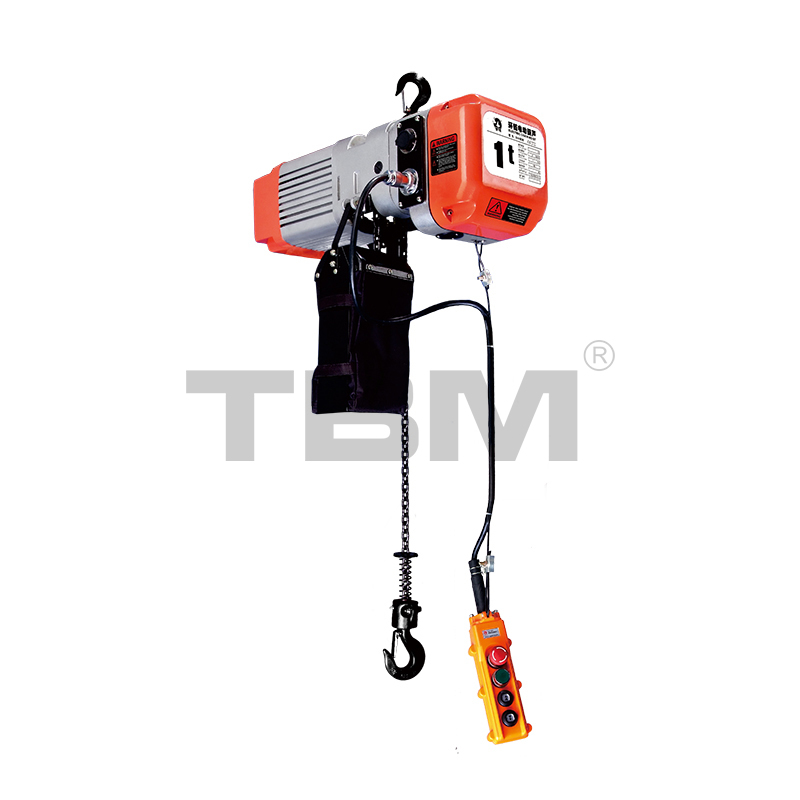 Custom SHH-A Electric Chain Hoist Manufacturers, Suppliers As China SHH-A Electric Chain Hoist suppliers and SHH-A Electric Chain Hoist manufacturers, Zhejiang Shuangniao Lifting Equipment Co., Lt... Visum Product →
 Environment and catena praesidium
Corrosion is the second major factor in chain life. In humid coastal plants, surface rust and pitting concentrate stress in the bending zones of each link. Marine and offshore work demands a hoist where the load chain, covers, and electrical components are protected against salt-laden air. The ZH series electrica marine catena levant is one example of a machine designed for exactly those conditions.
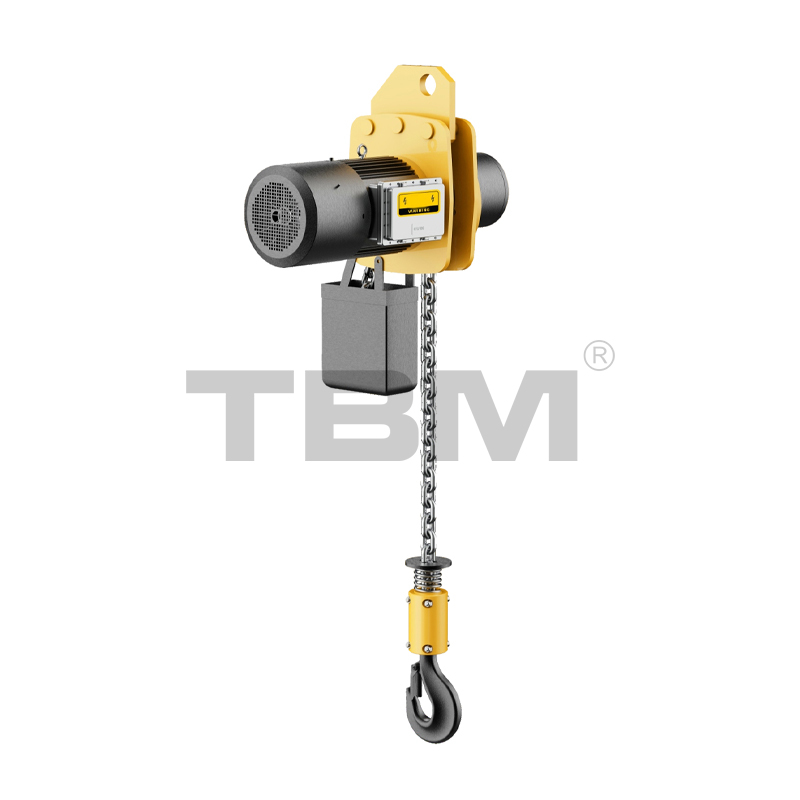 Wholesale Galvanized Electric Hoist Suppliers, Factory As China marine electric hoist suppliers and galvanized electric hoist factory, Shuangniao Lifting Equipment offers wholesale marine elec... Visum Product →
 Where the hoist is fixed in a single position, such as a work cell or loading station, the choice is simpler: a fixed-type chain hoist avoids the added weight of a trolley and keeps the chain aligned for a straight vertical lift, which also extends chain life.
Inspecting Your Hoist Chain: What to Measure and When to Replace
Onere catenae non fallitur improuiso. It fails after months of progressive wear, and that wear is measurable long before the chain is in danger of breaking. A good inspection program needs only two key measurements: chain elongation and link diameter reduction. If you are not sure which thresholds apply to your hoist, follow the manufacturer's manual and track elevatio industria nuntium pro updates in signis in regione tua.
Catena elongationis
Every chain stretches slightly under normal load. Elongation is measured across a defined number of links, typically five, using a locking caliper or chain gauge. When the measured length exceeds the original by roughly 2 ad 3 percent catena iam recte catenam devincit. At that point, the link pitch has grown enough to cause jumping, binding, and accelerated sprocket wear. Catena reponendum est.
Link diametri et superficiei conditione
Link diameter decreases as the chain rubs against the sheave and against adjacent links. Reductio V percent vel in link diameter late rejectio modus est usus. Also check for visible corrosion, pitting, nicked or cracked welds, and marks that indicate the chain has been struck or dragged across a sharp edge. Any of these is a valid reason to replace the chain immediately.
| punctum inspectionem | Rejectio limina | Causa rejectionis |
|---|---|---|
| Prolongatio super 5 nexus | 2 ad 3 percent stretch | Catena iam non congruit rotae catenae; periculo desiluerunt |
| Link diameter reductione | V percent vel | Reducitur crux section demittit fractionis onere sub tuto gradu |
| Corrosio et pitting | Rubigo visibilis, fovens vel flans in superficiebus ferens | Duritia perit et labor rimas formant in foveis |
| Rigidorum vel kinked nexus | Vincula quae gratis non inflectunt | Locus deformatio vel inpulsa damnum quod reparari non potest |
| Finditur welds | Ulla vox visibilis | Repositum statim requiritur; periculo subito separationem |
Practical Erroribus alind vinculum vitae
Catena erecta etiam recte designata moribus evitandis corrumpi potest. Frequentissima errata apud nos sunt;
- Nova sectio catenae in veterem catenam trahens. Diversi status gerunt concentrationes locales efficiunt, et nexus coniunctio fere semper est ubi incipit defectus.
- Utens uncto gravi loco catenae penetralis ducatus. Adipe colligit stridorem, et catenam in stridorem vertit.
- Servans pecuniam in inferiori gradu catenae. It is a poor trade when the chain is the only component between a suspended load and the floor.
- Offensus onerat applicando. A load that falls and is stopped suddenly can impose several times the rated force on the top links, permanently stretching them even when nothing appears damaged.
If a fixed installation is what you need and budget matters, choosing a hoist built for that role is a more sensible economy than downgrading the chain. The TC electricum cathena levabit certam figuram certae figurae praebet ubi catena et fasciculus ex officina congruunt.
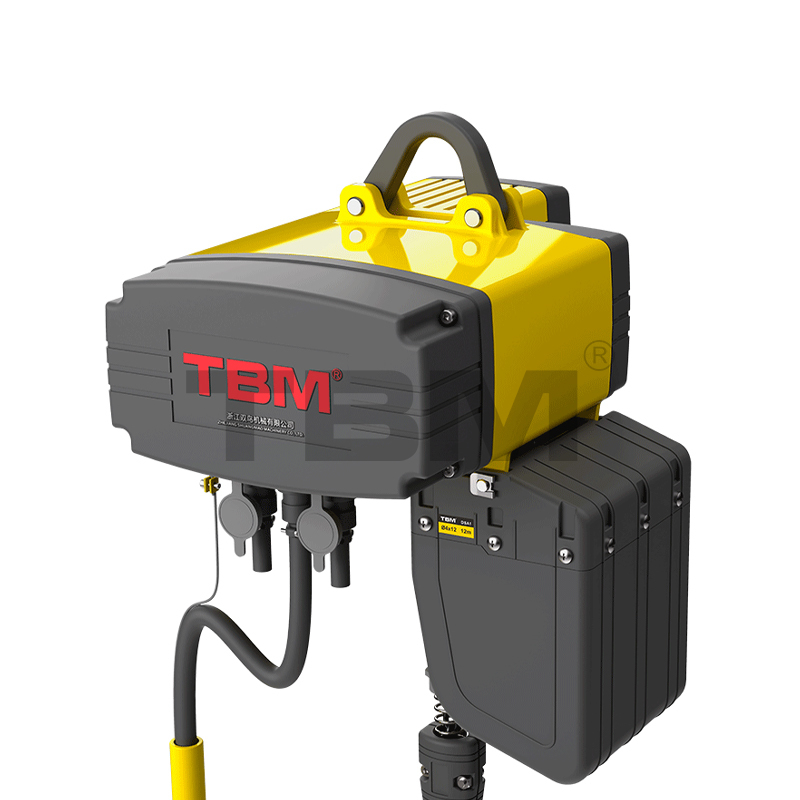 Tutus TC Electric Chain Levabit Factory, Suppliers - Zhejiang Shuangniao Lifti Zhejiang Shuangniao Elevatio Apparatus Co., Ltd est Sinis Lupum TC Catenam Electric Levate Praebitores et officinas, singula: Visum Product →
 Elige Levabit aedificatum Circum certa catenae
Catena lectio inseparabilis est ab eleccione Levabit. Even a premium grade 100 chain wears out quickly if the hoist does not feed it cleanly, guide it without twisting, and protect it from side loading. Quam ob rem catenam et levationem una subtilitas ratio tractari debet, non quasi duo sui iuris emptionem.
In our own range, the load chain is treated as a design component. The pocket sheave, chain guide, and lubrication path are engineered together so that the chain runs true on both the lifting and lowering strokes. Whether you choose an SHH-A general-purpose hoist, a ZH marine unit for corrosive environments, or a TC fixed-type machine for permanent positions, the chain specification is selected for the duty, not left to chance.
If you are unsure how to match a hoist chain to your load, duty cycle, and environment, our engineering and support teams can walk you through the calculation. Potes studere documenta industriae sublatione causa studiis from installations that use the same equipment, then contact elevatis elit cum specifica onus data. That combination of information is far more reliable than guessing from a worn-out nameplate.
News

Societas semper magnum momentum adhaesit novo evolutioni et technologicae innovationi, in summo principio positus, altae figurae.
Velox
Product Categories
Contact Us

N. IX Tenglong Road, Huangze Industrial Function Zonam, Huangze Urbs, Shengzhou urbem, Zhejiang Provincia, Sina

info@tbmhoist.com

+86 - 18957539688
Copyright © Zhejiang Shuangniao Lifting Equipment Co., Ltd.
